

Why WordPress SEO Breaks Without LinkWhisper
WordPress is built for publishing speed, not structural control. When you write a new post, nothing tells you what should link to it. Nothing shows you which pages are underlinked. Nothing highlights missed opportunities in older content.
Why WordPress SEO Breaks Without LinkWhisper
Most WordPress sites don’t have a content problem.
They have a linking problem.
Google has been consistent about this. Internal links help it discover pages and decide which ones matter. Pages that are not well connected are crawled less, understood less, and ranked less.
This is where tools like LinkWhisper become relevant.
Because in most WordPress environments, internal linking is not intentionally ignored. It is simply not managed well enough to keep up with content growth.
You publish, you move on, and over time, structure starts to fall behind.
What Internal Links Actually Do for Your SEO
Internal links quietly shape how your site performs.
They create paths for Google to follow. Without those paths, pages exist, but they are not easily reached or prioritized.
They move authority across your site. Backlinks bring value in, but internal links decide where that value goes.
They help Google understand how your content fits together. When related pages are connected properly, your site starts to build depth around topics instead of spreading thin.
Why WordPress Makes This Harder Than It Should Be
WordPress is built for publishing speed, not structural control.
When you write a new post, nothing tells you what should link to it. Nothing shows you which pages are underlinked. Nothing highlights missed opportunities in older content.
So linking becomes inconsistent.
Sometimes you add a few links. Sometimes you skip it. Most of the time, it is based on memory.
And the impact builds quietly.
Semrush data shows that 5 to 15 percent of pages on an average site have no internal links pointing to them. On WordPress sites, that number is often higher.
Botify has also found that orphan pages can consume up to 26 percent of crawl budget. That means Google is spending time on disconnected content instead of your most important pages.
Nothing breaks.
But nothing improves either.
Where LinkWhisper Fits In
LinkWhisper brings structure into a process that is usually left to chance.
It works inside WordPress, so you are not switching tools or exporting data. As you write, it suggests internal links based on context, helping you connect content in a way that makes sense.
It also shows you what you cannot normally see.
● Which pages are getting links?
● Which ones are not.
● Where your structure is weak.
At that point, it is no longer guesswork.
For larger sites, this becomes even more important. Instead of manually editing dozens of posts, you can manage internal links across your site in a controlled and efficient way.
What Changes When You Fix This
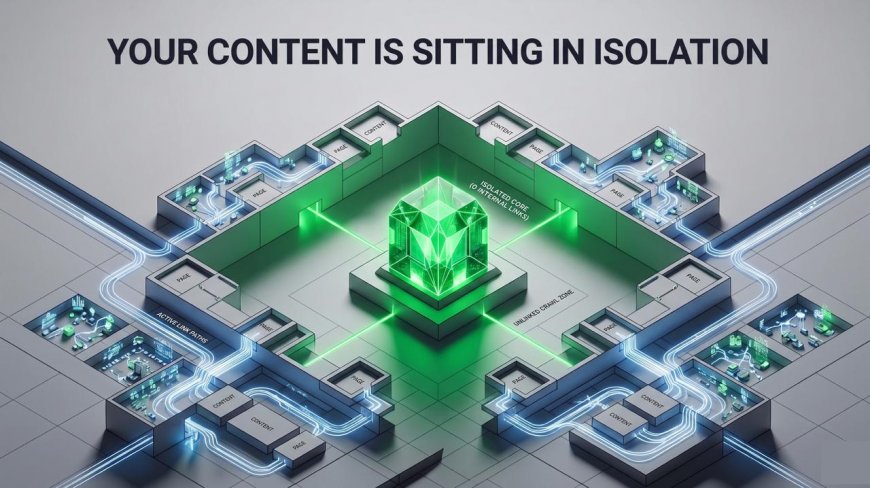
Content stops sitting in isolation.
New posts connect to existing ones from the start. Older pages gain relevance again. Google can move through your site more easily and understand what matters.
Authority begins to flow instead of staying locked in a few pages.
A Simple Way to Look at It
If your content is not ranking, the issue is not always what you wrote.
It is often how it is connected.
Final Thought
Strong content needs structure to perform.
Internal linking is what gives that structure.
LinkWhisper does not change your content. It helps you connect it properly so search engines can actually use it.
What's Your Reaction?
 Like
7
Like
7
 Dislike
0
Dislike
0
 Love
3
Love
3
 Funny
0
Funny
0
 Wow
4
Wow
4
 Sad
0
Sad
0
 Angry
0
Angry
0

Associate Desk Editor











Comments (0)